


Starting a mood journal in five minutes
You don’t need to write a lot every day. A single choice and a short note also build a history of your own over time.
- 4 min read
- 6 sections


In short
- Why does keeping it short work?
- The first minute: choose how you feel
- The next minutes: a one-sentence note
- Choose a moment for yourself
- Look back once a week
Keeping a journal brings to mind pages of writing; that's why many people never start. But tracking your mood doesn't require long entries. One choice and a one-sentence note each day turns, within a few weeks, into a history you can look back on. Five minutes is enough to start.
Why does keeping it short work?
The easiest way to keep up a habit is for it to need very little effort. If you aim for half an hour of writing every evening, you can give up the first day you're tired. A one-minute entry is possible even on your busiest day.
Short entries are also easier to read back later. Instead of scanning thirty days of long paragraphs, you look at thirty short markers and see the overall pattern.
The first minute: choose how you feel
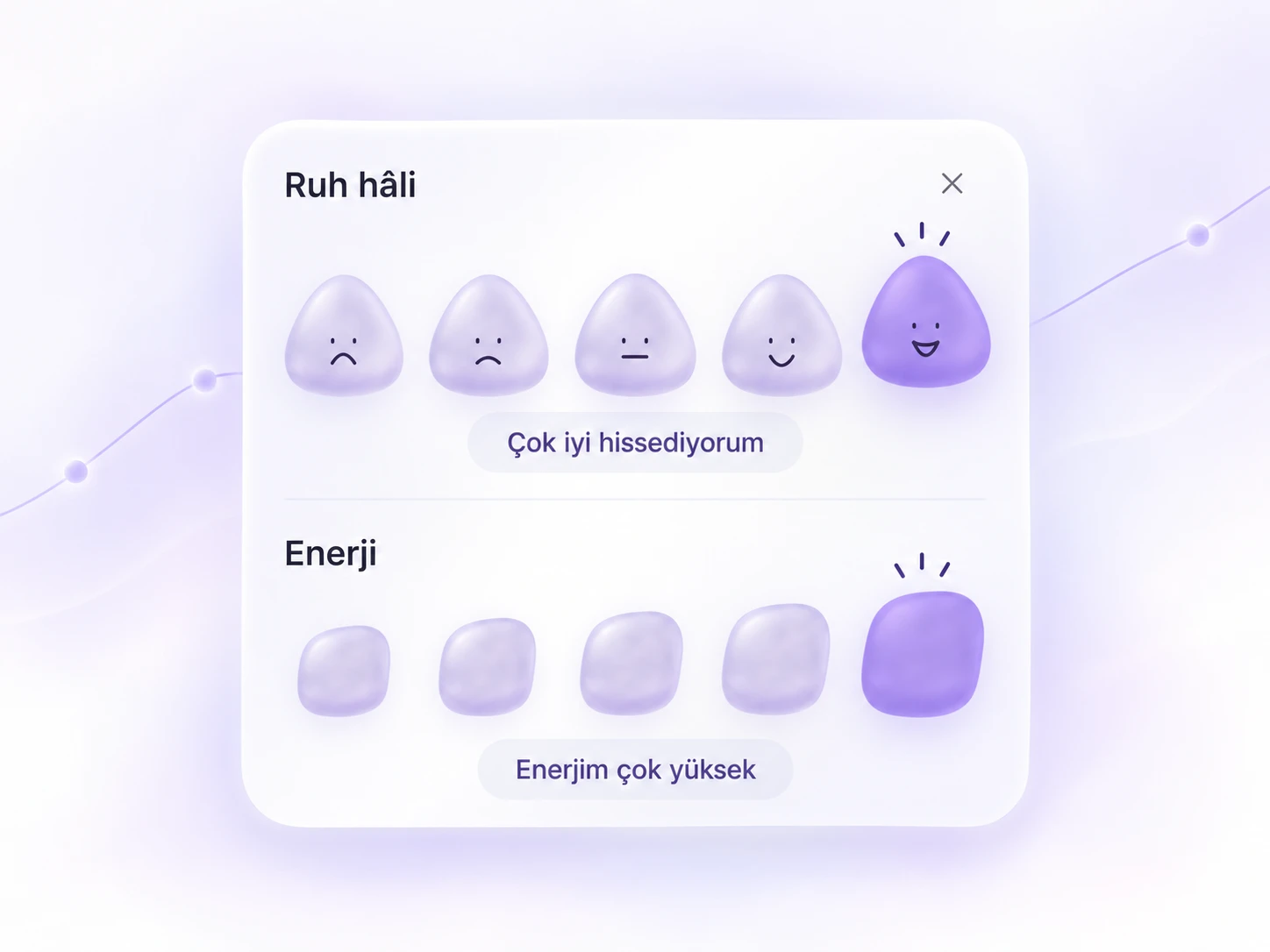
The starting point is a single question: how do you feel today? You don't need to think it over for long; the first thing that comes to mind is enough. A five-point scale, from "feeling very low" to "feeling great," covers most days. If you want a more precise name for the feeling, the six emotion families in our list of emotions for journaling can help.
If you'd like, add your energy alongside it. Mood and energy don't always move together; you can have days that are cheerful but tired, or restless but energetic. Marking the two separately makes the picture of the day a little clearer.
The next minutes: a one-sentence note
Add a sentence next to your choice. If you can't think what to write, pick one of these questions:
- What affected me most today?
- How did I sleep last night?
- What felt good today, and what didn't?
- What's the one thing on my mind for tomorrow?
The sentence doesn't need to be well written. A note like "the meeting ran long, the evening walk helped" is enough to remind you of that day weeks later.
Remember that you're writing the note only for yourself. No one will read it and grade it; a typo, a half sentence or a single word is fine too. What matters is putting down somewhere the mark that day left on you.
Choose a moment for yourself
Making the entry at roughly the same time each day helps the habit settle in. Some people like writing after dinner, some before bed, some with their morning coffee. Pick whichever suits you and set yourself a reminder.
Don't worry if you miss a day. The day you skip is simply left blank; that's not a failure, it just means there's no record for that day. You pick up again the next day where you left off.
To help you remember, you can attach the entry to something you already do: after brushing your teeth, while plugging in your phone at night, or when you leave work. A new habit settles in more easily when it's added onto an existing one.
Look back once a week
After keeping records for a few weeks, looking back is where the journal's real value shows. You might notice that midweek feels more tiring for you, or that you mark yourself as feeling better the day after sleeping well. These are your own observations; not an assessment, just a way of getting to know yourself a little better.
If you notice a change in your mood that worries you, tell your doctor or a specialist about it without waiting. Your records give you something concrete to point to when explaining how long you've felt this way. If you'd like ready-made prompts for stressful weeks, take a look at 5 short journal prompts for stressful times.
A five-minute journal in Oveluni
In Oveluni, this routine lives in Daily check-in. In the "How are you feeling?" section on the Today screen you can tap one of five faces, or open the Daily check-in record from the Quick add menu. There's a five-point scale for mood and energy; add a short note if you'd like.
- Mood and energy are optional; you choose which ones appear in your daily field preferences.
- You can turn on the daily check-in reminder in Reminder settings.
- Skipped fields are simply left blank; they're never counted as zero.
- In Summaries you see your daily observations charted over 7, 30 or 90-day periods, and can compare two periods side by side.
- Badges reward keeping records; taking a break doesn't erase your progress.
These summaries only reflect your own records; they don't diagnose. But once you start seeing your own rhythm after a few weeks, you'll understand why those five minutes were worth it. If you would like to track your energy the same way, see tracking your energy: a one-minute habit each day.
This article is for general info only. It does not offer diagnosis or treatment; it provides practical suggestions on recording and tracking. Consult your doctor for health decisions. Last updated: 14 September 2026
Was this article helpful?
Thanks, we got your feedback.