


What should you note when tracking your period?
Start and end dates, flow intensity and short notes: records that will be useful when you look back later.
- 4 min read
- 7 sections

In short
- Start and end dates
- Flow intensity
- Short notes: in your own words
- What do days with no record mean?
- When do records come in useful?
The point of keeping a period record isn't complicated charts; it's being able to see later what happened and when. When your doctor asks when your last period started, or when you're curious about your own pattern, a few accurate facts are far more useful than a long explanation.
Start and end dates
The most basic and most valuable information is the dates. Open the record the day your period starts, and close it when it ends. The start date is easy to remember; the end date is forgotten quickly, and it gets harder afterward to work out how many days the period lasted. We walk through how to work out your cycle length from these dates in how to track your period.
If you don't remember the exact date, writing an approximate day and adding "approximate" to your note is better than not writing it at all. What matters is that the record honestly tells you how certain it is. We walk through keeping these records in Oveluni step by step in Tracking your period days in Oveluni: a starter guide.
Flow intensity
Noting whether the flow was light, moderate or heavy makes it easier to see whether anything has changed between periods. The goal here isn't measurement, but leaving a marker based on your own observation.
You don't have to write something for every single day. An impression of the period as a whole is often enough. A small marker is all you need to later say "this month was different from usual."
Short notes: in your own words
A few words next to the dates make the record meaningful for you. A few examples of what you might write:
- How you felt: your own observations like tiredness, mood, sleep
- How you'd describe any pain or discomfort, in your own words
- What stood out in your life around those days: travel, a busy work week, sleepless nights
- Medications or supplements you took (you can also keep these in a separate medication record)
- A question that comes to mind that you want to ask your doctor
You don't need to try to interpret what your notes mean. The record keeps your observation; interpreting it, if needed, is something to do together with your doctor. For more on what to note in the days before your period, see what to track before your period.
What do days with no record mean?
Some months the record gets interrupted; that's completely normal. A day with no record doesn't mean nothing happened that day; it only shows that nothing was written down that day. That's why it's important not to read blank days as a sign of your own "irregularity."
If time has passed, you can still add a record after the fact. Write down what you remember; what's missing can stay missing.
When do records come in useful?
The value of period records usually shows up with a question. When you're asked at a check-up "When did your last period start?" or "How long does it usually last?", you answer by looking at your records instead of guessing.
It's also useful for your own curiosity. When a few months of records sit side by side, you can see for yourself how long your periods tend to last and what repeats in your notes. If a change catches your attention, bringing it to your doctor along with the dates makes the conversation easier.
The difference between a plan and a record
Some apps calculate and show the date of your next period. A calculated date and a record are different things: a record shows the days you actually experienced; a calculated date is an assumption. Keeping these two apart lets you read your own history more clearly.
Period records in Oveluni
In Oveluni, the Cycle area opens when you choose the women's profile in the Gender section under Settings. The Period days record in the Quick add menu brings together the information covered in this article in a single form:
- A start date; and, when your period ends, an end date you add with the "Period ended" toggle
- Flow intensity
- Your own note
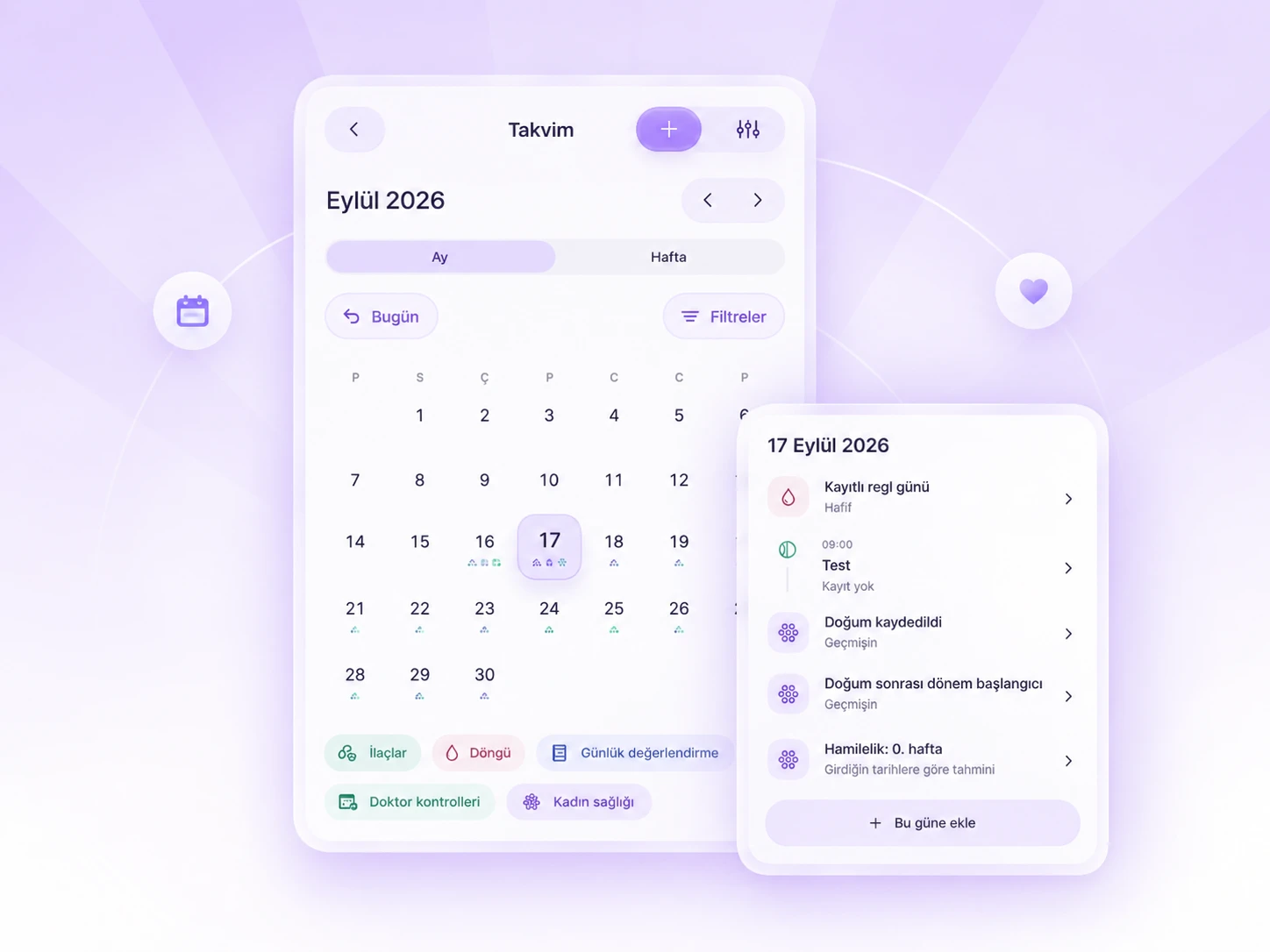
Your records appear in their own color on the Calendar; you can look back at past periods day by day, and see recorded period lengths in Summaries. If you'd like, you can also set up a monthly plan marking certain days of each month. But this is a plan you set yourself; it is not a cycle prediction. You still record the days that actually happen separately.
Oveluni doesn't predict fertility, ovulation or pregnancy. It only shows the history you've recorded, and days with no record don't carry any meaning about your cycle. Period days also keep their calendar date while you're traveling.
Before a check-up, you can save the date range you choose as a PDF report; the report will also include the period days within that range. You choose which categories go into the report, and your notes aren't included by default.
This article is for general info only. It does not offer diagnosis or treatment; it provides practical suggestions on recording and tracking. Consult your doctor for health decisions. Last updated: 16 September 2026
Was this article helpful?
Thanks, we got your feedback.